Tuesday, 23 June 2015
Moving to Wordpress, Sorry Blogspot
I am moving my writing to Wordpress. The new site will be wonderingontheedge.wordpress.com. I look forward to sharing my writing with you there!


Wednesday, 15 April 2015
The K-2 Presentation Template: Transforming the Classroom with Technology
As teachers, we are encouraged to engage in “best practice” on a daily basis with our students. Our professional development often includes rationale to support new initiatives with “best practice” for students in mind. But, what about employing “best practice” approaches to learning with teachers in professional development? Integrating technology into education is not as simple as implementing a new program or learning strategy. It changes the game entirely.
Teachers often see results of technology integration and are expected to replicate these fabulous learning experiences without enough support for their own learning. Teachers love to know the details of how things work. They are the curators of learning management. In order to do this teachers, like students need a certain amount of context to understand the value of technology integration. Time is of the essence in all classrooms. However, the K-2 classroom presents even more dynamics of urgency for teachers. Large amounts of planning is being spent preparing the environment, and helping students manage behaviors, than in other age groups grades 3-12. When K-2 teachers are asked to implement and integrate technology into their classroom learning lives, they need to see it. Teachers appreciate the real classroom examples where the kids are being kids. Teachers also appreciate the candor of others who share their struggles across the journey. It is my hope to make my learning journey more transparent for K-2 teachers so that they will be able to adjust their teaching and learning environments in small ways with big results for engagement, student centered learning.
Greeting Slides for the Low Tech Crowd
Fifteen years ago I would have had strong opinions against using a slides presentation with five and six year olds. It sounds cold. When I am sharing a favorite read with my students, I like to be close to them. They are gathered on the carpet wrapped around me. It is intimate and personal. As soon as teachers see a screen in front of the classroom, it starts to lose the warm elementary feel. The screen often separates the teacher more from the students. It’s important as curators of learning we fight to maintain that gentle and close relationship with our little ones. But, as teachers we have the privilege to enter their digital filled lives and adjust some of their thinking about how to create a conversation including technological tools in learning. Get out your tools and lower that screen so students can see it from the carpet without craning their necks. I started by making a slide to greet my students at the beginning of the day. First it replaced the list of things to do on the board.

Then, I started changing it to fit some calendar objectives. So, in the beginning, yes, it was a thousand dollar pencil. But, you do what you know. Teachers need to be reminded there’s nothing wrong with that. The Morning Message encouraged by the people over at the Responsive Classroom continues to be a meaningful way to start the day with early readers. Color coding high frequency words and using a “Dear Students” format is how I started the year on chart paper.

This might be a good goal to work for by the end of the school year. Let this one slide evolve for you over time.
Moderate technology Teacher Learners
Expanding the slides throughout the day may sound as simple as using an interactive schedule. We all know how much teachers love checklists. Each slide can have an objective for the lesson or “I can statement.” If your district requires certain learning objectives posted. This is an easy way to do that. Multiple slides might look like this:


Teacher with Advanced Technology Wisdom
For my math lesson last week, I linked a screencast in my math slide to help my students hear a lesson I had previously taught by a different teacher. I saw they struggled with the work and needed reteaching. I’m not suggesting these screencasts be the primary delivery method for lessons. Using Educreations, or Quicktime and posting through Vimeo could be another way to make screencasts to link into the daily template. Photos of students engaged in the objective can be added. Students can then talk from these images to the group, explaining their thinking during the task. Linking photos of student examples with other mentor examples, video, text, audio, can be powerful.
Here is slide with students' questions after an open ended research session. Students had problems. We talked about how problems are a very common part of the research process. I recorded their problems so we could come back to them the next day. Not only did I have plans for the next day, they were directly connected to what the students wanted to learn about. The plans were made specifically to answer the questions and problems pertaining to their own learning. There were also kids teaching other kids.

The Key to Student Engagement is Representing the Student's Ideas and Thinking
Here is slide with students' questions after an open ended research session. Students had problems. We talked about how problems are a very common part of the research process. I recorded their problems so we could come back to them the next day. Not only did I have plans for the next day, they were directly connected to what the students wanted to learn about. The plans were made specifically to answer the questions and problems pertaining to their own learning. There were also kids teaching other kids.
Together, the students and the teacher create the most relevant learning community. Through technology, the learning can transform content and process in a more organic way. The content and process can then be shared with a wider audience. Parents and other students in the school can celebrate the learning.
Tuesday, 5 August 2014
New (School) Year Resolutions: August is a teacher's January
Setting Goals with Intention: Students First
Before Labor Day weekend, I get to see their faces. Those smiles, still in sundresses and flip flops. They are the little people who will fill my world with wonder for the next two years. Putting students first continues to be the most important priority for teachers. All our intentions and motivations at the beginning of the school year need to be about developing a relationship with each child. Getting photos of each child with their favorite book is a task I hope to complete at Open House.
Eating an Elephant One Bite at a Time: Mapping Out the Year
There are so many decisions to make. So many teachers online are sharing back to school routines. These are critical for promoting independence and collaboration in the classroom. But, I feel an urgency to get the long term planning and goal setting out of my head and onto some kind of document. Otherwise, my head is going to EXPLODE! Hopefully, I can sit down with several of my colleagues so we can pool our thoughts to focus on the essentials across the year. Since I am trying to use Evernote this year, I am wondering if I could take a screen shot of a calendar, import it into Skitch, add notes as needed throughout the year. There are so many ideas and visions swimming around in my head. I need to remember to build in a gradual release model in my planning for everything.
Integration of Content: the Old and the New
Its always helpful to look over the curriculum with fresh eyes. Of course routines are going to take first priority. There are artful ways to do this well. What have I done in the past, and how can my students explore the content and processes in new and exciting ways? I'm excited about creating an email "turn in bin." Creating an email for my class to use to send all digital assignments is a practice Kristin Ziemke introduced to me at a Reading Workshop. This and many other tips can be found in the book she coauthored with Stephanie Harvey, Anne Goudvis, and Katie Muhtaris, Connecting Comprehension and Technology http://www.heinemann.com/products/E04703.aspx
New Year's Resolutions: August is a teacher's January
Each summer I spend my August longing for a magic recipe to mix the lovely pace of summer with the insanity of a productive school year. Keeping up on posts on my blog goes well for September. But, all of a sudden its March and I am madly blogging with the Two Writing Teachers for the Daily Slice of Life Challenge. Instead of blogging for myself this year, I'm going to try blogging with my students. Hopefully, first graders can see the power of writing for an audience starting with their parents. Next, we will try and communicate with authors and illustrators. Or, maybe we can even try and correspond through questions to experts. It's another school year. I'm fresh and ready to learn right along side my first grade kiddos.
Friday, 25 July 2014
Engaging in the Digital Learning Community: Playing Full Out
Over the last few days, I have been inspired to go deeper into the on line educational professional community! How? Engaging in conversation using Twitter, reflecting about the conversation through blogging, and curating my learning with my own personal digital tools. This is a pretty big commitment. But, I feel like the two classes I took this summer have me primed for the challenge.
There were a few connections with people to push me into this challenge. First, I have to thank Meenoo Rami, teacher, educational coach and ringleader extraordinaire. I am only now, through your work on Thrive, getting to know you and the power of one.
 Chris Lehman's announcement to coordinate a learning community on line: The Educator Collaborative. I am thrilled to be able to meet him next week at Hope College. My final inspiration for all this action is my excitement about the learning I will get from Kristen Ziemke. After blogging for eight years, I finally feel like I know where I'm going next. Where I'll end up? Who knows?
There were a few connections with people to push me into this challenge. First, I have to thank Meenoo Rami, teacher, educational coach and ringleader extraordinaire. I am only now, through your work on Thrive, getting to know you and the power of one.
Saturday, 12 July 2014
The Complex Forest of Reading and Writing: What have you found on your journey?
 |
| Saugatuck, Michigan |
So what am I learning? First, the act of reflection never loses its power. No matter where you are in any career, you are a human being, created with the power and will to create and make meaning! So, upon entering my 20th year of teaching and learning, I am going deeper into the woods of writing. This is a dense, complex forest. Sometimes its hard to see and you have to feel your way through, making your own path. Part of my path as a writer has been continuing to blog about my learning. What can you teach me? If you write, please share your struggle and lonely journey. In our age of technology, it does not need to be a path of solitude. We have enough teaching solitude in our classrooms (not that I don't adore spending my days with the little people.) Please jump into the conversation! Even if you are not so sure of your online presence, take a risk. If you have the courage to engage on Facebook, Twitter, email, Instagram, heck, texting, then take a leap to share your learning in these contexts. This is real reading and writing people. We have this opportunity to share all we do for 180 days in our mini communities. Don't be afraid to celebrate your amazing journey through the woods.
Wednesday, 18 June 2014
School's Out: So How Come I Can't Stop Learning?
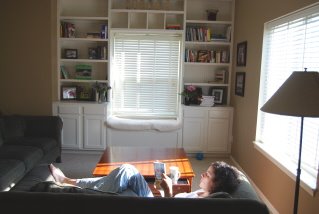
As I continue to grow wiser (not older, right - who needs that?) my hope is to continue to find balance in my writing as in everything I do. I guess its wise to notice that life doesn't work that way - in perfect balance. Life is an ever changing unpredictable journey. We just have to trust we are doing the best we can with what we know now and what we have in front of us. Otherwise we are doomed to live in the world of what ifs. But, that's not really living, is it?
Friday, 18 April 2014
Play, for the sake of it!
I am so serious when I teach. I really need to loosen up. One way I try to laugh more is reading funny books. Right now I'm reading The Trouble with Chickens by Doreen Cronin. There is a ton of sarcasm which requires a lot of inferring. So, it's a great interactive read aloud.

Lately, I feel like all the joy in learning is being sucked up by data analysis and close reading. Don't get me wrong, these teaching tools have a place. But, like anything else in education, once a shift has been made we educators, and our community, tend to beat a dead horse with the latest educational practice. In protest, and just to play it up on a Friday, I decided to turn on a song that reminded me of the characters and tone in this book. The song "Ain't Nobody Here But us Chickens" is a jaunty tune that requires one to shake a tail feather just a little while listening. Some students just sat there or hid under a table, because they were literally floored by my behavior. Others relished the opportunity to dance and celebrate a little. If you need a happy little tune to lighten your mood, try listening to this forgotten gem. If you are teaching second grade or higher, I recommend this book for some clever writing and mysterious twists. The characters are simply hilarious.
Subscribe to:
Posts (Atom)